Have you ever wondered how increasing inequality and polarisation would shape Education? How artificial intelligence, virtual realities, and other technological advances could change teaching and learning?
Trends Shaping Education is a triennial study that explores the social, economic, technological, environmental, and political forces transforming educational systems around the world. These trends are strong, but the questions raised by this report are suggestive. These reports are intended to stimulate reflection and strategic thinking about how global trends could transform Education.
The 2025 Edition explores a wide range of topics related to the key themes of global cooperation and conflict, work and progress, and voices and storytelling. It builds on previous foresight tools and introduces a variety of new future-thinking tools to inspire action.
This report was designed to provide policymakers, educators, researchers, educational leaders, and administrators with a reliable, non-specialist resource on international trends affecting Education. It will also be of interest to parents, students, and anyone interested in how Education can prepare for tomorrow and address today’s issues.
Executive Summary
This report examines global megatrends shaping societies in OECD nations and beyond from an educational perspective. The report raises questions regarding the implications of global trends for different stages and sectors in Education. It also offers tools that can help educators anticipate disruptions and plan strategically for the future. Future thinking is a powerful tool to help educate systems in times of rapid uncertainty and change. It allows education policymakers to make adaptive and resilient decisions by imagining and exploring different scenarios. This proactive approach will help to prepare education systems for possible disruptions and to take advantage of emerging opportunities. This summary highlights the key trends that were explored in this edition, along with questions that they might raise for Education.
A world polarised
This report, dated 2025, reflects the fact that the early 2020s were marked by escalating geopolitical tensions and ecological crises. These have had far-reaching consequences for migration, energy security and trade dynamics, employment markets, and policy priorities. Conflicts and crises around the world have a negative impact on human and planet health. They exacerbate inequalities and create new ones.
Inequalities in social and economic terms can exacerbate political polarisation as divergent priorities and interests are intensified by differences in financial and life experience. The dictionary publisher Merriam-Webster chose Polarisationas the Word of the Year for 2024, based upon significant increases in searches and its relevance to current events. This shows how opposing views and beliefs are a feature of modern society, from politics to social interactions.
The trends examined in this report present a contrasting and diverse picture of social progress. Life outcomes are closely related to the intersection between personal and group characteristics, such as age and gender, migration background, and socio-economic situation. People’s moral and social circles can shrink when they are threatened by economic hardship or feel unsafe. They may also prioritize their family or their in-group. This can be exacerbated by the fragmentation of media and the growth of social media, which reinforce echo chambers while reducing exposure. In contrast, when we are feeling secure, our openness and empathy will likely increase.
Geopolitical tensions, global crises, and the importance of Education in fostering resilience and providing learners with a feeling of security are all highlighted by these events. It includes both those directly affected and children who are growing up in an increasingly unstable world and conflict-ridden. Education may not be able to solve the root cause of global conflict and climate change, but can it help learners understand influence and demand changes? What role can Education play in fostering respect for diversity and social cohesion, along with other public policies? How can Education help promote intergenerational understanding and harmony in a world that many believe will see today’s kids as less fortunate than their parents?
New forms for progress
Despite these tensions, the progress made by international cooperation and global advocacy shows that collective action is possible. Recent history has shown that international cooperation is the best way to address global challenges such as pandemics and climate change. It can also be used to tackle cyber attacks, disruptions of energy supply or cyberattacks. By pooling financial and scientific resources, societies can respond to global crises more quickly and effectively. International cooperation can also help consolidate social progress in terms of human rights, equality, and non-discrimination by setting global standards and norms.
In many countries, the trust that people have in democratic institutions is declining. However, those who feel like they can influence government decisions are more likely to report a higher level of trust. The importance of citizen involvement is highlighted by the fact that various forms of participatory governance offer citizens the opportunity to have a meaningful influence on public decisions. The voice of the citizen is increasingly expressed in diverse ways, which challenges traditional democratic processes. The rise of movements like #MeToo and Black Lives Matter, as well as decolonial perspectives, have fueled debates on whose stories should be told and heard in democracies. The explosion of social media and digital technologies has brought new challenges, allowing false and misleading information to spread. However, they have also allowed more voices to be heard in the democratic debate.
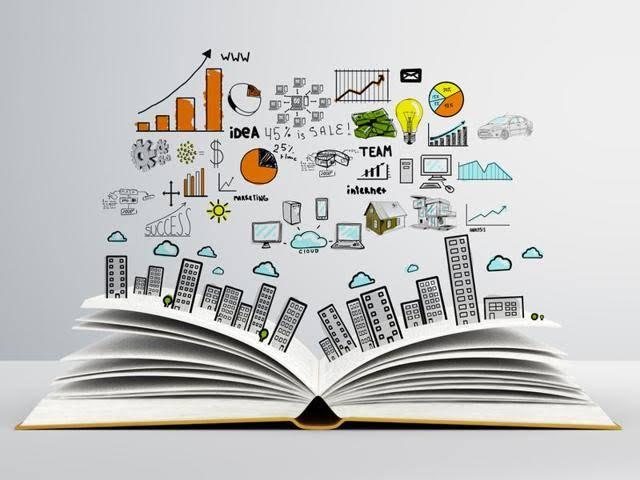
In general, technological innovations and advancements are changing all aspects of life and helping us imagine new ways to tackle global issues such as climate change, food safety and public health. Artificial intelligence, virtual reality, and the Internet of Things are transforming how we learn, work, and communicate. While there are many concerns regarding job displacement, data privacy and equity, and mental health, these technologies promise to transform industries such as agriculture, transportation, and medicine.
Rapid labour-market changes have raised questions in Education about how to anticipate future skills needs and diversify the educational pathways needed to meet rising demands for highly skilled employees and lifelong learners. How can we best balance the teaching of specific competencies with the broader skills required to learn throughout life? How can educational systems balance the teaching of foundational skills with more complex ones in a manner that does not compromise one set for another? How can the education industry use technology to optimize its core processes?
How will the future impact on the human workforce and how we interact? In a changing world, it is clear that work is no longer a central part of identity for many young people. AI expands robots’ ability to work alongside humans in various fields. This means that in the future, more people will collaborate with intelligent machines. While human relationships are still the most important aspect of caring for others, technology has the potential to change social interactions. Can Education maintain a community with less direct human contact and promote socio-emotional well-being and learning?
This report explores these and other questions about Education. It encourages readers to engage with its content actively.